Climate forecasters and global meteorological bodies have signaled a high probability of a strong El Niño weather pattern extending through late 2026 and into 2027. For Southern African agriculture, this isn’t just a weather update — it is a severe operational risk.
Historically, El Niño events in the region trigger prolonged heatwaves, delayed summer rains, and below-average seasonal rainfall. For commercial growers, livestock managers, and agricultural engineers, relying on “business-as-usual” rainfall or already over-allocated boreholes is no longer a viable strategy.
To protect crop yields, preserve livestock herds, and maintain farm solvency, South African agribusinesses must shift from reactive water management to proactive, large-scale storage buffer systems today.
Key Takeaway: During an El Niño cycle, rainfall is not only sparse — it is erratic. Capturing high-volume runoff during brief, intense storm events requires massive surface storage capacity.
The 2026/2027 Climate Reality for Southern African Farms
When El Niño takes hold in Southern Africa, the immediate impacts ripple across the entire agricultural value chain:
- Lower Water Tables: Underground aquifers recharge slowly. Sustained over-pumping during dry spells causes boreholes to dry up or yield saline, low-quality water.
- Elevated Evaporation Rates: Extreme ambient temperatures accelerate evaporation losses in open farm dams, stripping away millions of liters of usable irrigation water.
- Increased Peak Demand: Hotter conditions demand higher daily evapotranspiration replacement for crops and significantly higher daily consumption rates for cattle and poultry.
Relying on traditional earth dams or municipal supply lines during a severe drought introduces massive risk. Earth dams suffer from seepage and severe evaporation losses, while municipal supply networks frequently implement agricultural throttling during regional water shortages.
       EL NIÑO IMPACT ON FARM WATER INFRASTRUCTURE

  [ Unprotected Earth Dam ]          [ Sealed Steel Reservoir ]
             │                                   │
  ┌──────────┴──────────┐             ┌──────────┴──────────┐
  ▼                     ▼             ▼                     ▼
Seepage           Evaporation     Zero Seepage         Low Evaporation
Losses            Losses          (Lined Tank)        (Domed Roof)
Securing Irrigation & Livestock Reserves: The Modular Steel Advantage
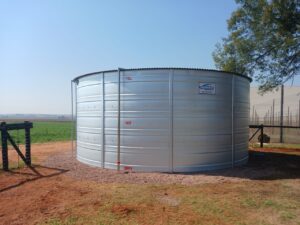
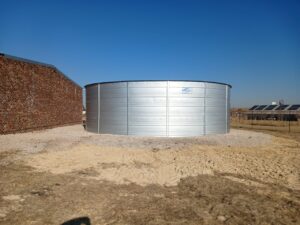
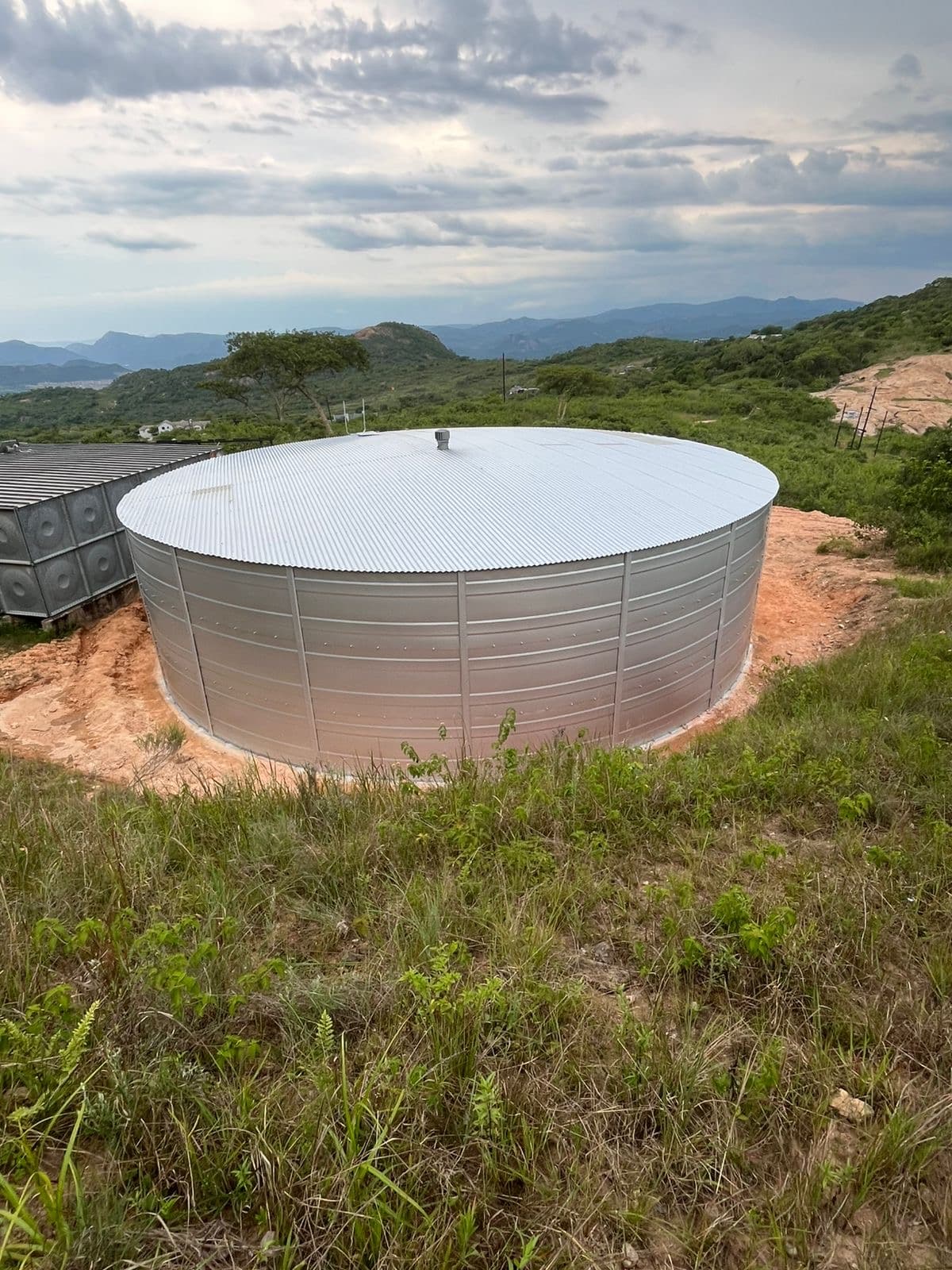
To build true water security before the dry spell hits, agribusinesses are increasingly turning to engineered, large-scale surface storage. Sectional bolted steel reservoirs offer the speed, scale, and longevity required to store massive reserves fast.
Here is why modular steel tanks are the primary line of defense for commercial farms preparing for El Niño:
1. Rapid Deployment Before Rains Drop Off
Constructing traditional concrete reservoirs or expanding earth dams takes months of earthmoving, curing, and regulatory approvals. Sectional steel tanks are flat-packed and transported directly to remote farm locations. Modular panels allow rapid on-site assembly, meaning a 1,000,000-liter reservoir can be fully operational in days rather than months.
2. Scalable Capacities (50,000L to 4,000,000L+)
Agricultural needs vary wildly — from smaller daily livestock feeding setups to massive multi-hectare drip irrigation reserves. Modular sectional designs mean tanks can be sized precisely to your peak crop water budget, with total storage capacities ranging from 50,000 liters up to multi-million-liter industrial-grade reservoirs.
3. Food-Grade Potable Liners Protect Water Quality
Water quality directly impacts yield. Stagnant or contaminated water damages drip irrigation emitters and harms livestock. High-spec steel tanks utilize heavy-duty, food-grade RPVC liners (1000gsm) that keep stored liquid untainted, odorless, and completely safe for both high-value crop fertigation and livestock consumption.
4. Corrosion Resistance Built for African Conditions
Tanks constructed with anti-corrosive Aluzinc® steel offer superior longevity compared to traditional galvanized options. The protective zinc-aluminum coating reflects solar heat, reduces internal water temperatures, and withstands harsh agricultural environments without requiring ongoing surface painting or maintenance.
Concrete Comparison: Earth Dams vs. Sectional Steel Reservoirs
| Feature | Open Earth Dam | Sectional Steel Reservoir |
| Water Loss | High (Severe seepage & surface evaporation) | Near Zero (Fully lined with optional domed roof) |
| Water Quality | High risk of silt, algae, and runoff pollution | Potable grade, closed environment |
| Footprint / Prep | Extensive land clearance & heavy excavation | Compact; sizes under 350,000L require no concrete base |
| Relocatable | Permanent (Non-recoverable asset) | Modular (Can be disassembled and moved) |
| Life Expectancy | Requires constant desilting & wall maintenance | 40+ year lifespan with structural warranties |
Strategic Action Steps for Agribusiness Managers
To ensure your agricultural operations remain resilient through the 2026/2027 El Niño cycle, implement these three structural adjustments today:
- Calculate Your 90-Day Operational Buffer: Determine the minimum daily water volume required to maintain core operations (crop survival threshold + livestock daily needs) and multiply by 90 days.
- Audit Current Storage Efficiency: Inspect existing dams and piping for seepage or bottlenecking. Measure evaporation losses on open surface water.
- Install Bulk Storage at High-Yield Capture Points: Position modular steel reservoirs near farm packhouses, shed roofs, or high-yielding boreholes to capture maximum volume whenever water is available.
Need expert guidance on sizing your farm’s water reserves?
Rainbow Reservoirs manufactures and installs premium Aluzinc® sectional steel water tanks across Africa, engineered specifically to withstand the harshest agricultural environments.Request a bulk storage quote today.