With global meteorological models and NOAA confirming an intensifying, potentially record-breaking El Niño cycle heading into 2026/2027, South Africa faces a season of climatic extremes. Across the Western and Eastern Cape, agricultural producers, industrial operations, and municipalities are facing a stark reality: waiting for drought conditions to set in before securing bulk water reserves is an invitation to disaster.
The catastrophic memories of the Cape’s historic “Day Zero” crisis remain fresh. To shield businesses, farms, and communities from the severe heatwaves and evaporation rates projected for the coming cycles, proactive, large-scale water storage is no longer optional—it is an operational necessity.
Understanding the El Niño Threat to the Cape in 2026/2027
While El Niño typically brings severe drought directly to South Africa’s summer-rainfall regions, its ripple effect across the Cape is devastating in unique ways:
- Unprecedented Heatwaves and Evaporation: Forecasts point to above-average ambient temperatures and record-breaking heat spikes. Open-surface dams and municipal catchments lose staggering volumes of water to evaporation daily under prolonged high temperatures.
- Extreme Wildfire Risks: Drier brush, combined with high temperatures and seasonal winds, increases the frequency and severity of runaway veld fires across the Cape winelands, orchards, and coastal fynbos biomes.
- Municipal Grid Strain and Water Shedding: Deteriorating reticulation infrastructure cannot handle the sudden spikes in demand that accompany prolonged heatwaves. Pumping stations face pressure, leading to localized water outages and strict water restrictions.
- Crop and Export Vulnerability: High-value export crops—including table grapes, citrus, deciduous fruit, and wine varietals—depend on reliable, timed irrigation. Water shortages during critical phenological stages directly threaten fruit size, yield, and market contracts.
The Danger of Reactive Water Planning
Drought is a slow-onset hazard. It does not strike overnight; it compounds quietly over months as soil moisture depletes, dam levels drop, and municipal tariffs spike.
Relying on open farm dams or municipal feeds as a sole source of supply leaves operations exposed:
- Open dams allow massive water loss due to thermal convection and wind exposure.
- Groundwater depletion accelerates rapidly as surrounding operations start pumping boreholes simultaneously during dry spells.
- Lead times for infrastructure increase drastically during an active drought as thousands of businesses rush to buy tanks at the exact same moment.
Taking action now—while water supplies and catchments still have operational reserves—ensures you capture and preserve clean water before scarcity drives costs up.
Why Rainbow Reservoirs Is the Cape’s First Line of Defense
For commercial farms, packhouses, mines, and industrial sites, standard plastic storage tanks simply cannot deliver the bulk capacity required to sustain uninterrupted operations through prolonged drought cycles.
Rainbow Reservoirs provides premier, heavy-duty bulk water containment systems engineered specifically to withstand the harshest African climates:
1. High-Capacity Aluzinc® Steel Construction
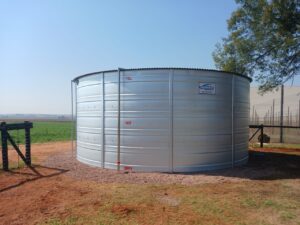
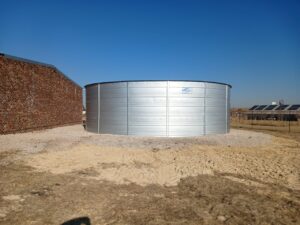
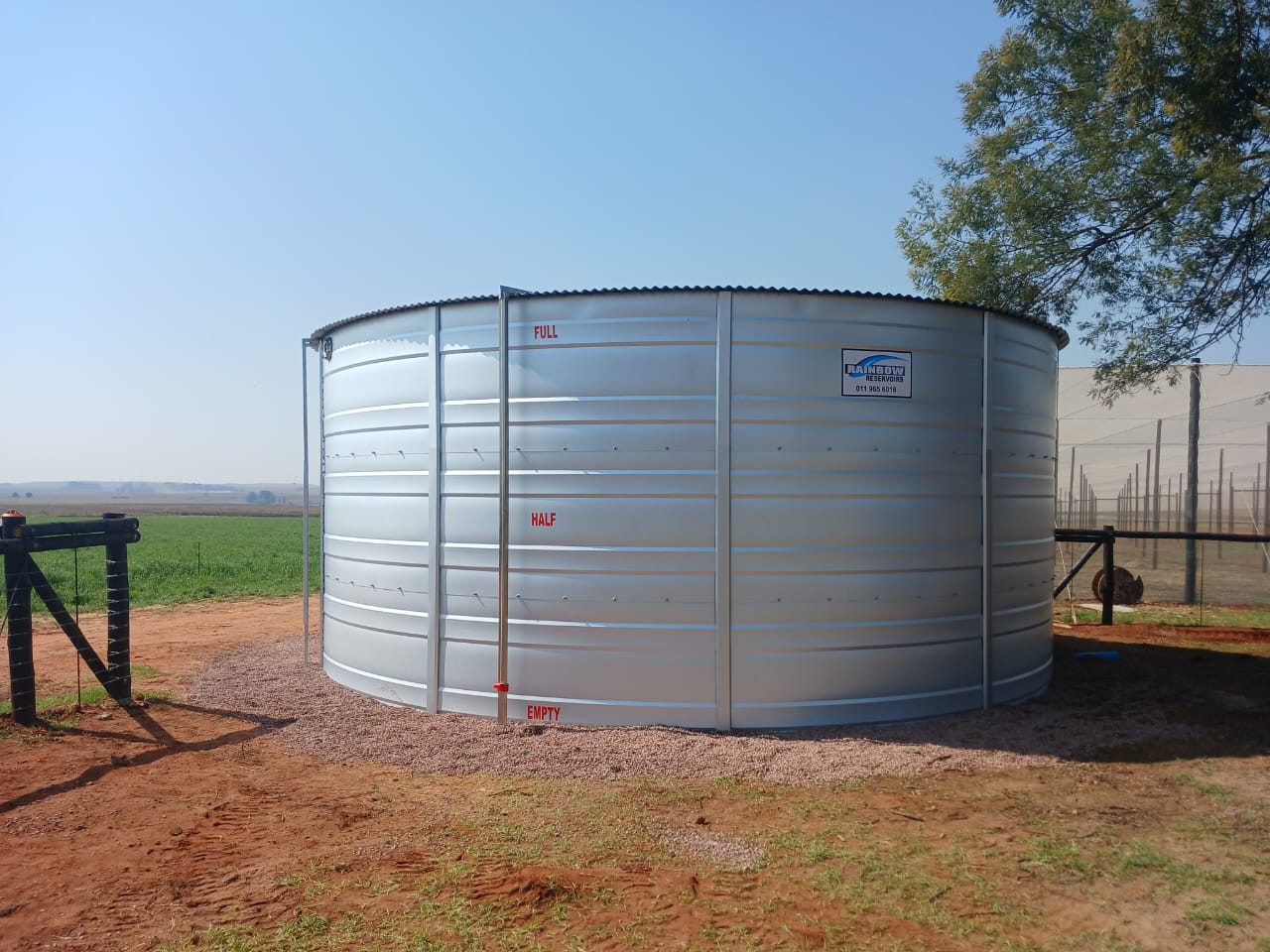
Rainbow Reservoirs manufactures modular, sectional steel panel tanks utilizing high-grade Aluzinc® coated steel. Aluzinc outlasts traditional hot-dip galvanized steel by 3 to 7 times, providing exceptional resistance against the corrosive, saline coastal air typical of the Western and Eastern Cape.
2. Scalable Bulk Storage (5,000 to Over 5 Million Liters)
Whether you need process-water reserves for a processing facility, dedicated irrigation storage, or municipal backup, capacities scale from small commercial installations to multi-million-liter industrial reservoirs.
3. Evaporation and Contamination Protection
Unlike open holding dams, fully enclosed Rainbow Reservoirs are engineered with domed roofs, vermin-proofing, and food-grade, heavy-duty reinforced liners. This stops water loss from evaporation, prevents algae growth, and keeps stored drinking or process water clean and untainted.
4. Certified ASIB-Approved Fire Protection Tanks
With the increased fire hazard expected during the 2026/2027 El Niño summer, compliance with SANS 10400-T fire regulations is critical. Rainbow Reservoirs is a listed supplier on the Automated Sprinkler Inspection Bureau (ASIB) records and a member of the FPASA, delivering dedicated fire sprinkler and hydrant water storage complete with vortex inhibitors and flow-control systems.
5. Rapid On-Site Assembly
Tanks are supplied in flat-pack kit format, ensuring rapid transport and on-site assembly even in remote agricultural regions or challenging terrains.
Crucial Steps to Secure Your Water Independence Today
| Priority Area | Action Item |
| Harvest Winter Rains | Integrate large-capacity Aluzinc tanks to capture late winter and spring rains before dry summer months hit. |
| Buffer Borehole Yields | Pump low-yield boreholes continuously into a bulk reservoir to build high-volume reserves ready for peak demand. |
| Protect Against Fire | Install dedicated ASIB-compliant fire storage tanks to safeguard packhouses, cellars, and warehouses. |
| Enclose Existing Reserves | Transition vulnerable open-dam irrigation buffers into covered, lined sectional tanks to halt evaporative loss. |
Secure Your 2026/2027 Operations Now
The climatic warnings for 2026 and 2027 are clear: weather volatility is escalating, and the Cape cannot afford complacency. Investing in reliable, high-capacity water containment today ensures your business, harvest, and infrastructure remain fully protected when drought conditions arrive.
Don’t wait for restrictions to take effect. Contact Rainbow Reservoirs today to consult with an engineering specialist and design an Aluzinc® bulk water storage solution tailored to your operational demands.