As we move through 2026, the traditional “top-down” approach to water management in South Africa is facing a reckoning. With municipal reliability hitting record lows and a projected 17% water deficit by 2030, forward-thinking businesses are no longer waiting for government-led solutions.
The shift toward decentralized water infrastructure—localized, self-contained systems that manage water at the point of use—is transforming from a niche sustainability trend into a core operational strategy.
What is Decentralized Water Infrastructure?
In a centralized system, water is treated at a massive distant plant and pumped through hundreds of kilometers of aging, leak-prone pipes. A decentralized water system, however, treats, stores, and manages water exactly where it is needed—on your factory floor, your retail complex, or your farm.
By integrating high-capacity commercial water storage tanks with localized filtration or harvesting systems, businesses create a “water island” that remains functional even when the municipal grid fails.
Why the Shift is Accelerating in 2026
1. Eliminating “Single Points of Failure”
When a major municipal pipe bursts, an entire district loses water. Decentralized systems distribute risk. By maintaining on-site reservoirs, businesses bypass municipal maintenance outages and “water-shedding” events, ensuring that cooling towers, sanitation, and production lines never stop.
2. Radical Cost Efficiency
Up to 75% of the capital expenditure in traditional water systems is spent on the piping network. Decentralized infrastructure removes the need for miles of expensive trenches and pumps. Modular systems, like those offered by Rainbow Reservoirs, allow businesses to scale their storage capacity in phases, matching their investment directly to their growth.
3. Climate and Infrastructure Resilience
South Africa’s “30th driest country” status, combined with aging infrastructure, means that 2026 is a year of “Drought-Driven Diversification.” Decentralized systems allow for:
- Rainwater Harvesting: Turning your warehouse roof into a catchment area.
- Borehole Integration: Storing groundwater safely in food-grade lined tanks.
- Greywater Reuse: Recycling process water for irrigation or industrial cleaning.
The Role of Modular Storage in Decentralization
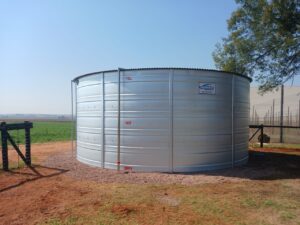
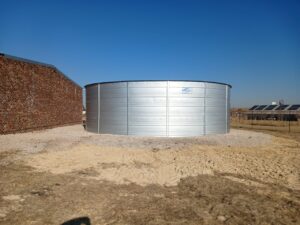
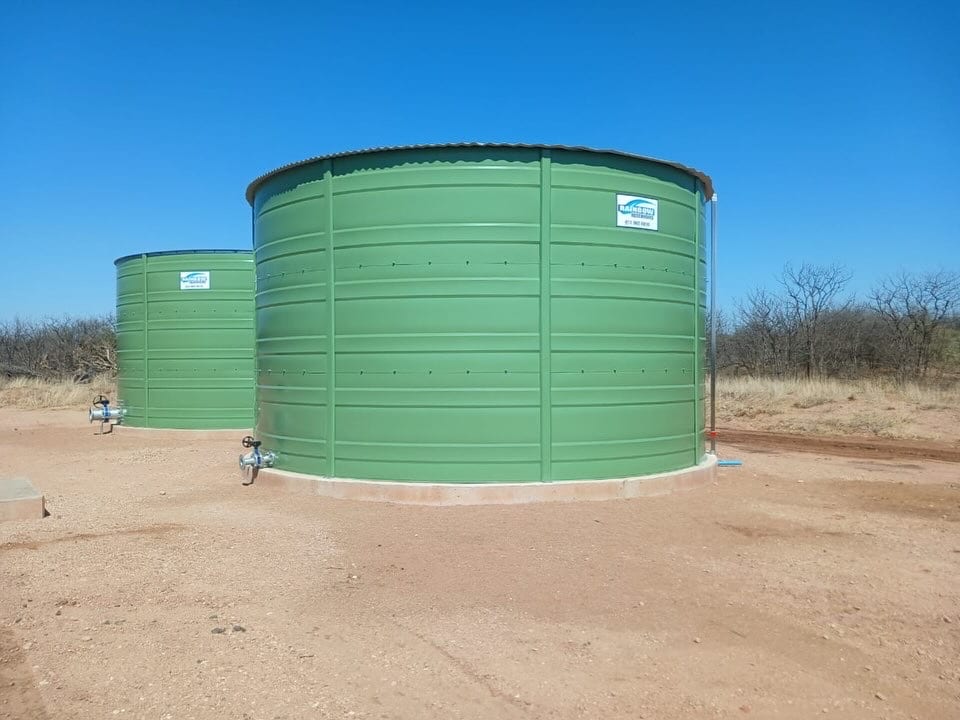
The backbone of any decentralized strategy is the ability to store vast amounts of water securely. Aluzinc® sectional steel tanks have become the gold standard for this role in 2026 for several reasons:
- Rapid Deployment: Unlike concrete reservoirs that take months to cure, modular steel tanks can be flat-packed and assembled on-site in a matter of days.
- Longevity: With high-tech anti-corrosive coatings, these tanks are built to last 40+ years, surviving the harsh African sun and saline environments.
- Mobility: In the mining and construction sectors, decentralized assets need to be portable. Modular tanks can be dismantled and relocated as project sites shift.
Is Your Business Ready for Water Independence?
The transition to decentralized water infrastructure is more than an engineering choice; it is a financial one. Recent data suggests that the benefit-to-cost ratio for investing in water resilience can be as high as 10:1 when factoring in the cost of avoided downtime.
As we look toward the remainder of 2026 and the challenges of 2030, the question is no longer whether you can afford to decentralize, but whether you can afford to remain tethered to an unreliable central grid.
Take the First Step: Securing your water future starts with a robust storage foundation. Explore howRainbow Reservoirscan help you design a decentralized system tailored to your industry.