Climate forecasters and global meteorology bodies have signaled a high probability of a strong El Niño weather pattern developing through late 2026 and extending into early 2027.
While South Africa currently benefits from favorable soil moisture levels and dam reserves following previous La Niña rainfall, history teaches us a critical lesson: water security is won during the preparation window, not during the crisis.
As temperature anomalies rise and seasonal rainfall patterns shift across Southern Africa, businesses, commercial farms, and industrial sites face significant operational risks. Here is what you need to know to safeguard your water security before the heat sets in.
What the 2026/2027 Forecast Means for Operations
El Niño typically brings below-average seasonal rainfall combined with above-average ambient temperatures to the interior of Southern Africa. This combination creates two major challenges:
- High Evapotranspiration Rates: Surface heat rapidly strips moisture from soil, open earth dams, and unsealed water bodies.
- Increased Municipal & Yield Pressure: Rain-fed crops, livestock, industrial process lines, and commercial cooling systems experience immediate demand spikes while supply shrinks.
Waiting for mid-summer heatwaves to evaluate your storage capacity leaves your operations vulnerable to supply interruptions, operational downtime, and crop or livestock stress.
3 Pillars of Strategic “Drought-Proofing”
To protect business continuity, agricultural yields, and commercial facilities, leaders must take proactive steps toward water resilience:
1. Shift from Open Earth Storage to Sealed Containment
Open dams lose millions of liters annually to evaporation—a loss multiplied during El Niño heat spikes. Transitioning to heavy-duty, sealed storage reservoirs keeps your water supply intact, vermin-proof, and secure from external contamination.
2. Upgrade Commercial & Fire-Fighting Reserves
Water stress puts extra strain on municipal systems. Ensuring your facility has dedicated on-site bulk storage—including ASIB-approved fire protection tanks for commercial warehouses and processing plants—guarantees continuous operation and regulatory compliance even during local supply outages.
3. Deploy Scalable, High-Capacity Solutions
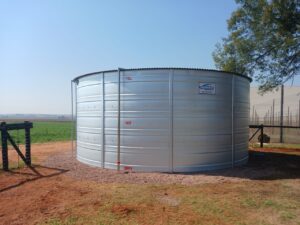
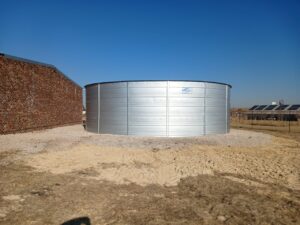
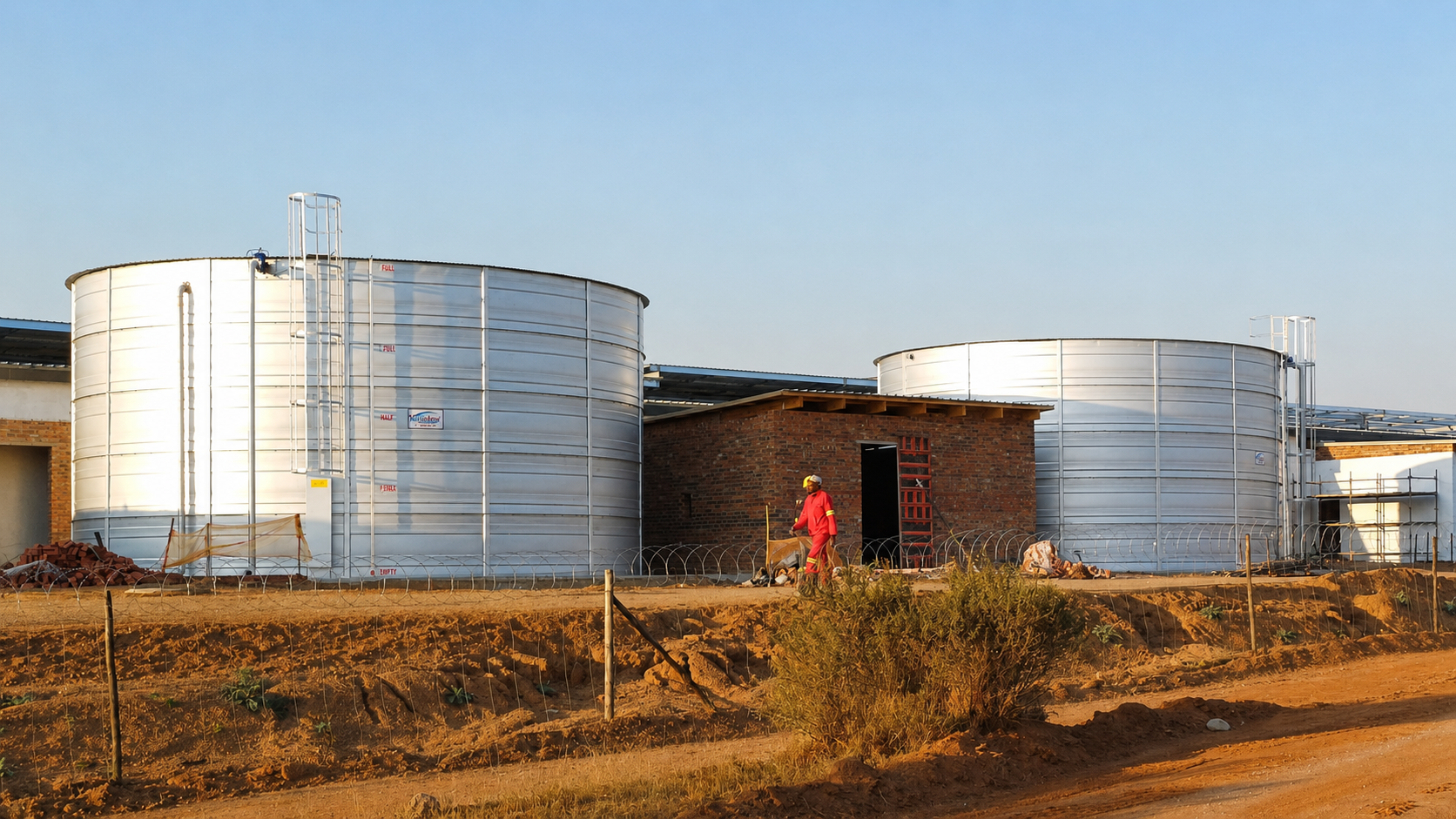
Traditional small-scale plastic tanks are rarely sufficient for commercial or agricultural volume demands, while concrete structures take months to build and require massive capital expenditure. Sectional modular steel reservoirs provide rapid, scalable capacity from 5,000 liters up to over 4 million liters, installed on-site in days.
Engineered for African Resilience: Rainbow Reservoirs
At Rainbow Reservoirs, we manufacture and install high-performance Aluzinc® sectional steel water tanks engineered specifically to withstand Africa’s extreme climate conditions.
- 4x Longer Lifespan: Built with high-tensile Aluzinc® steel for superior corrosion resistance and heat reflectivity compared to traditional galvanized alternatives.
- Potable & Pure: Equipped with heavy-duty, food-grade internal liners to ensure stored water remains 100% safe, clean, and uncorrupted.
- Rapid Modular Deployment: Transported flat-packed to urban rooftops or remote agricultural land and assembled in days without complex infrastructure.
- Certified Quality: Fully ASIB-compliant for fire protection systems, backed by a structural warranty built for long-term peace of mind.
Don’t Wait for the Heatwave
Drought-proofing your infrastructure is an investment in risk management, business continuity, and operational independence.
Is your facility prepared for the 2026/2027 climate outlook?